 By Ezrah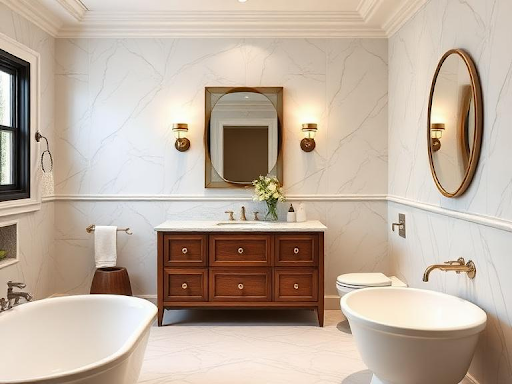
Walk into any well-designed American bathroom and you will almost certainly find a vanity that is doing more than one job. It is organizing toiletries, housing plumbing, framing the mirror, setting the aesthetic tone of the room, and silently telling guests something important about the people who live there. That is a lot of weight for a single piece of furniture to carry — and the best vanities carry it effortlessly.
The shift toward design-conscious storage
For decades, bathroom storage in American homes defaulted to the practical: medicine cabinets, pedestal sinks with no storage at all, or bulky cabinets that prioritized function over form. That era is firmly behind us.
Today’s homeowners want both. They want a vanity with enough storage to keep a busy household organized — deep drawers, soft-close hinges, dedicated compartments — and they also want it to look like it belongs in a boutique hotel or a feature spread in Architectural Digest. These two demands are not in conflict. The market has matured to the point where you genuinely do not have to choose between them.
“A well-chosen vanity can elevate an average bathroom into a space that feels intentional, calm, and genuinely luxurious.”
What makes a vanity worth investing in
Not all vanities are created equal. The difference between a budget piece and a well-crafted one shows up in the details: the quality of the dovetail joints, the weight and smooth action of the drawer slides, the depth of the finish, and how well the unit holds its shape after years of humidity cycles. When you are evaluating a vanity, run your hands along the edges. Open the drawers slowly. Look at how the back of the cabinet is finished. These small signals are reliable indicators of overall quality.
Materials matter enormously. Solid wood construction — particularly hardwoods like oak, maple, or walnut — performs far better in bathroom environments than particleboard or MDF, though high-density MDF with proper sealing is perfectly acceptable in lower-humidity installations. Look for plywood carcass construction and solid wood door frames when buying in the mid-to-premium range.
Trusted names in the American vanity market
Among the brands that American interior designers and contractors consistently recommend, a few stand out for balancing design ambition with reliable craftsmanship. The James Martin Bristol vanity is one of the most frequently cited in renovation conversations — and for good reason. It brings a refined, transitional aesthetic that works across design styles, from coastal casual to modern farmhouse to urban contemporary. The solid wood construction and attention to finishing details put it well above what you would typically find at a big-box retailer.
On the more design-forward end, the Studio Design bathroom vanity collection has earned a loyal following among homeowners who prioritize a sleek, minimalist look without sacrificing practicality. Clean lines, floating configurations, and carefully considered proportions make it a natural fit for modern and mid-century influenced bathrooms. Both represent what the current market does best: combining genuine storage function with aesthetic confidence.
Sizing and configuration: getting it right the first time
One of the most common and costly mistakes in bathroom renovation is choosing a vanity based on how it looks in a showroom, rather than how it will actually fit and function in the intended space. Before you fall in love with any particular unit, measure carefully — not just the floor footprint, but the height, the depth, the clearance from the door swing, and the rough plumbing location.
Standard vanity heights in the U.S. sit at 32 inches, though the growing trend toward “comfort height” or “adult height” vanities — at 36 inches — reflects changing preferences and ergonomic thinking. If you are taller than average or share the bathroom with people of varying heights, the extra four inches can make a meaningful difference in daily comfort.
Double-sink configurations have become increasingly popular in primary bathrooms, particularly in homes with two adults sharing the space. These require a minimum of 60 inches of counter width to work comfortably, with 72 inches being the sweet spot for most couples who want personal storage on each side.
Integrating luxury without overspending
Luxury in a bathroom does not require a limitless budget. It requires thoughtful prioritization. Put your money into the vanity itself — the piece you touch and see every single day — and you can pull back on other elements without the room feeling compromised. Pairing a well-made vanity with simple subway tile, a clean frameless mirror, and quality plumbing fixtures in a single finish will always look more intentional and elevated than the reverse.
The fixture finish is where many homeowners underestimate the importance of consistency. Whether you choose brushed nickel, matte black, champagne bronze, or polished chrome, commit to it across the faucet, towel bars, toilet paper holder, and light fixture. Mixing finishes reads as an afterthought; a single unified finish reads as a design decision.
Storage is the final piece of the luxury equation that is easy to overlook when shopping for a vanity. A beautiful cabinet with poorly designed interior storage will frustrate you every morning. Look for full-extension drawers, adjustable shelving inside cabinets, and dedicated organizational dividers where possible. The most luxurious feeling in a bathroom is opening a drawer and finding everything exactly where you expect it.
FREQUENTLY ASKED QUESTIONS
What is the best vanity height for most American adults?
Comfort height vanities at 36 inches are increasingly preferred, as they reduce back strain and feel more ergonomic for most adults compared to the traditional 32-inch standard.
How do I know if a vanity is well-made before buying?
Check for solid wood or plywood construction, test the drawer glides for smooth soft-close action, and inspect the interior finish — quality pieces are finished inside the cabinet, not just on the exterior.