 By Allen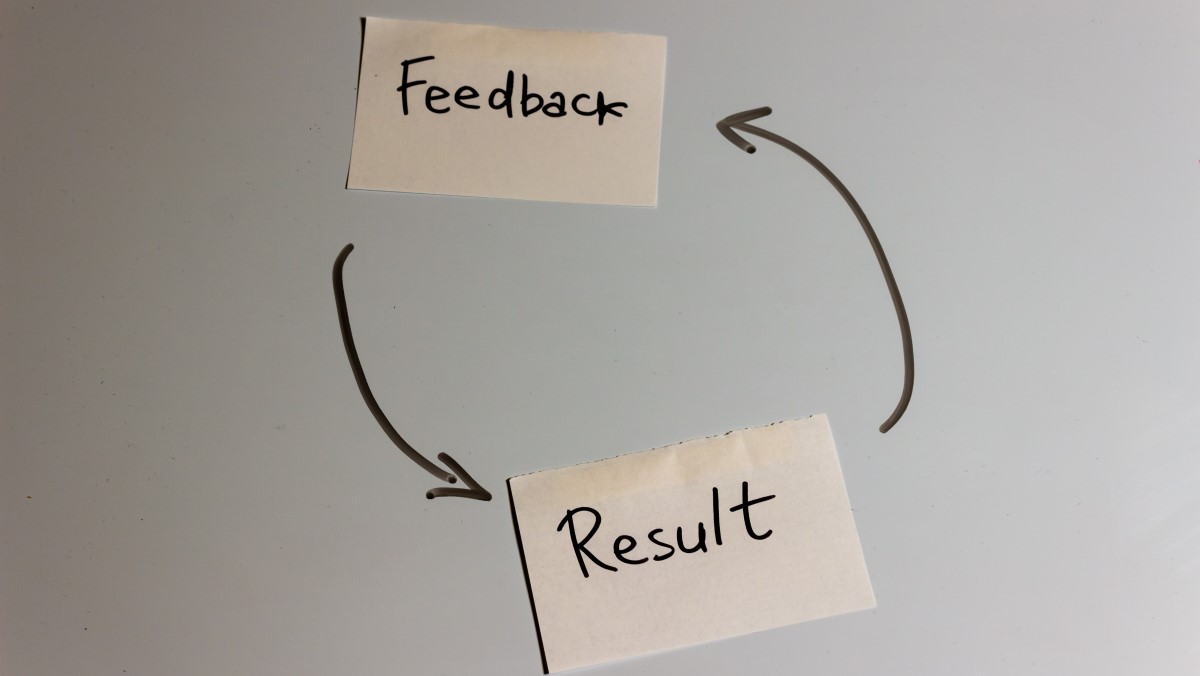
Introduction
Performance marketing has evolved from a channel-driven discipline into a systems-driven one. In today’s environment, where algorithms adapt quickly and consumer behavior shifts constantly, results are no longer determined solely by creative quality or budget size. They are determined by how effectively teams learn from performance data and apply those learnings back into campaigns.
This is where feedback loops become critical. A performance marketing feedback loop is the structured process through which data from campaigns is collected, analyzed, translated into insights, and reintegrated into strategy and execution. Without a deliberate loop, teams risk operating reactively, making isolated optimizations without understanding their broader impact.
Well-designed feedback loops create compounding returns. Each campaign informs the next, each experiment sharpens decision-making, and each optimization improves system-wide performance. Over time, this leads to more predictable growth, stronger unit economics, and better use of marketing capital.
Understanding the Anatomy of a Feedback Loop
At its core, a feedback loop consists of four interconnected stages: measurement, interpretation, action, and validation. Each stage must be clearly defined and operationalized for the loop to function effectively.
Measurement involves capturing relevant data across the funnel, from impressions and clicks to conversions, revenue, and post-purchase behavior.
Interpretation translates raw data into insights by identifying patterns, anomalies, and causal relationships.
Action applies those insights to campaign structure, targeting, creative, bidding, or budget allocation. Validation assesses whether the actions taken produced the intended outcome, closing the loop and informing the next cycle.
The strength of a feedback loop depends on how quickly and accurately information flows between these stages. Delays, data gaps, or misaligned metrics weaken the loop and reduce its impact.
Aligning Feedback Loops With Business Objectives
One of the most common reasons feedback loops fail is misalignment with business objectives. When teams optimize for metrics that do not reflect real value, the loop may function mechanically but still produce poor outcomes. This is a challenge frequently observed in a digital marketing agency environment, where performance indicators must stay tightly aligned with client business goals.
Effective feedback loops begin with clarity on the primary objective at each stage of the business lifecycle. Early-stage companies may prioritize learning velocity and signal quality, while growth-stage businesses focus on scalable acquisition efficiency. Mature organizations often optimize for lifetime value, retention, and contribution margin.
Once objectives are defined, KPIs should be selected based on their ability to signal progress toward those objectives. Feedback loops should then be built around these KPIs, ensuring that every insight and action is anchored to business impact rather than surface-level performance.
Building a Reliable Measurement Foundation
A feedback loop is only as strong as the data feeding into it. In performance marketing, measurement challenges often stem from fragmented platforms, inconsistent attribution, and delayed reporting.
To build a reliable foundation, teams must first standardize definitions across metrics. Terms such as “conversion,” “qualified lead,” or “return on ad spend” should have consistent meanings across channels and tools. This prevents misinterpretation and ensures comparability.
Next, data collection should be automated wherever possible. Manual reporting introduces delays and errors that slow the feedback loop. Real-time or near-real-time dashboards enable faster diagnosis and response, particularly in high-spend environments.
Finally, attribution models should be chosen intentionally. While no model is perfect, consistency matters more than precision. A stable attribution framework allows teams to observe trends over time and make confident decisions based on directional accuracy.
Turning Data Into Actionable Insights
Data alone does not improve performance. Insight does. The interpretation stage of the feedback loop is where many organizations struggle, often due to information overload or a lack of analytical rigor.
Effective insight generation requires structured analysis. Rather than reviewing dashboards passively, teams should ask specific questions: What changed? Why did it change? Is the change statistically meaningful? How does it compare to historical benchmarks?
Segmentation plays a critical role at this stage. Aggregated metrics can mask important patterns, while segmented views, by audience, creative, placement, or geography, reveal where performance is truly driven. Over time, these segmented insights inform more precise targeting and creative strategies. Importantly, insights should be documented and shared. Institutional knowledge compounds when learnings are recorded and revisited, rather than rediscovered repeatedly.
Designing Experiments Within the Feedback Loop
Experimentation is the engine that powers effective feedback loops. Without controlled testing, optimizations are based on assumptions rather than evidence. Each experiment should begin with a clear hypothesis derived from prior insights. For example, a team might hypothesize that a new value proposition will improve conversion rates among a specific audience segment. The experiment should then isolate the variable being tested while holding others constant.
Measurement criteria must be defined in advance, including success thresholds and evaluation timelines. This prevents bias and ensures that decisions are based on pre-agreed standards rather than post-hoc rationalization.
Once results are collected, they should be fed back into the loop. Successful experiments inform scaling decisions, while failed tests still generate valuable learning that refines future hypotheses.
Closing the Loop With Fast and Disciplined Execution
Speed is a critical factor in feedback loop effectiveness. The faster insights are translated into action, the more competitive advantage they create. To enable speed, execution processes must be standardized. Campaign structures, naming conventions, and creative workflows should be designed for rapid iteration. Clear ownership ensures that insights do not stall due to ambiguity around responsibility.
At the same time, discipline is essential. Not every data fluctuation warrants action. Feedback loops should distinguish between signal and noise, prioritizing changes that are both meaningful and aligned with strategic objectives. By balancing speed with rigor, teams can iterate confidently without destabilizing performance.
Integrating Cross-Channel Feedback Loops
Modern performance marketing rarely operates within a single channel. Consumers interact with brands across search, social, display, and owned media, making cross-channel feedback loops increasingly important.
Integrated loops allow insights from one channel to inform decisions in another. For example, high-performing creative themes on social media can guide messaging in search ads, while search query data can inform audience targeting on paid social.
Achieving this integration requires centralized reporting and regular cross-functional reviews. When teams operate in silos, feedback loops remain fragmented, limiting their potential impact.
Avoiding Common Feedback Loop Pitfalls
Despite their value, feedback loops can fail if not designed carefully. One common pitfall is over-optimization, where teams chase short-term gains at the expense of long-term performance. This often occurs when loops focus narrowly on immediate conversion metrics without considering downstream effects.
Another risk is confirmation bias. Teams may unconsciously favor insights that validate existing beliefs, ignoring contradictory data. Structured experimentation and predefined success criteria help mitigate this risk.
Finally, feedback loops can become overly complex. Adding too many metrics, dashboards, or approval layers slows decision-making and dilutes focus. Simplicity and relevance should guide loop design. In such cases, reaching out to top performance marketing agencies like Intent Farm can help streamline measurement frameworks, eliminate unnecessary complexity, and ensure that feedback loops remain aligned with meaningful business outcomes.
Scaling Feedback Loops as Organizations Grow
As spend and complexity increase, feedback loops must evolve. What works for a small team managing a few campaigns may not scale to an organization operating across regions and channels.
Scalable feedback loops rely on automation, clear documentation, and training. Standard operating procedures ensure consistency, while advanced analytics tools enable deeper insight without proportional increases in manual effort.
Leadership also plays a role by reinforcing a culture of learning. When experimentation and iteration are valued, feedback loops become embedded in daily operations rather than treated as occasional exercises.
The Role of External Expertise
Building and maintaining high-performing feedback loops requires both strategic perspective and technical execution. For many organizations, partnering with specialists can accelerate this process by introducing proven frameworks and unbiased analysis.
Conclusion
In performance marketing, sustainable success is not achieved through one-time optimizations or isolated wins. It is achieved through systems that learn continuously and improve deliberately.
Feedback loops provide that system. By connecting measurement, insight, action, and validation into a cohesive cycle, they transform data into a strategic asset. Over time, well-built loops improve efficiency, resilience, and predictability, qualities that are increasingly valuable in a competitive and algorithm-driven landscape.
Organizations that invest in robust feedback loops do more than improve campaign performance. They build a marketing engine capable of adapting, scaling, and compounding results over the long term.
By aligning data, experimentation, and execution, such partnerships help brands move from reactive optimization to proactive performance improvement. Businesses seeking to strengthen their marketing systems can reach out to Bangalore’s top performance marketing agency like Intent Farm to explore how structured feedback loops can drive measurable results.