 By Allen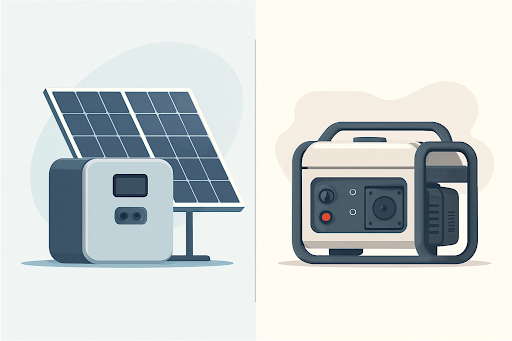
Deciding between a solar generator and a gas generator isn’t just a matter of cost or power. It’s a matter of how you actually live, where you’ll use it, and what trade-offs you’re prepared to make. For a new homeowner figuring out an emergency plan, for an RV traveler finding the quietest campsites, or even for a student learning about clean energy, it becomes easy to make this decision when you start comparing real-world use, not just specs printed on a box.
I’ve written about backup power and off-grid gear for years, and one consistent theme arises when I talk to experts and relay user feedback: People seldom regret purchasing the right kind of generator for their needs, but frequently regret buying based on peak watts alone. Let’s change that by comparing the two in an approachable, reliable way, and especially for those looking into solar power generators for the first time.
What Is a Solar Generator and How Do Solar Generators Work?
A solar generator is generally a face-plate based lithium-battery + inverter + charge controller, which you can recharge with solar panels, an outlet, or a car. In simple terms, solar power generators give you the ability to store electricity in a battery and deliver it when you need power using AC outlets or DC USB/12V connection.
Unlike gas systems, a solar generator doesn’t “generate” electricity by burning fuel. It is a battery’s ability to deliver power when it is needed, and keeps the energy in reserve so you won’t be at the mercy of an electric breakdown. It makes a difference because it affects everything from noise, maintenance and where you can safely run the motor, to your expectations.
Core elements of a solar generator
Energy is stored in a battery (usually lithium iron phosphate or lithium-ion). An inverter provides AC power. Safe solar input is regulated by a charge controller. Taken together, the system is a simple, convenient power source and perfect for indoor-safe use, light to moderate loads and smooth-running.
What Is a Gas Generator and What Are They Good For?
A gas generator employs an engine to convert fuel into electricity. It excels where you need a ton of continuous output, quick refuel times and long runtimes without needing access to the sun or having grid power. If you’ve ever noticed a neighborhood with extension cords spider-webbed across its lawns following an outage, it’s often because a gas generator is doing the bulk of the heavy lifting.
The downside: Engines need maintenance, fuel storage, ventilation and a tolerance from noise along with exhaust. For a lot of folks, those downsides are worth it, particularly in areas where outages occur often and power demands are high.
Solar Generator vs Gas Generator: How They Each Operate Up Close
Power output and load handling
A gas generator is usually the best option for high-wattage equipment, like big tools or large pumps, or when you need to run multiple major appliances at once. You may find that engine-driven units, which come in bigger sizes as a rule of thumb, are good for handling starting surges (perhaps from refrigerators or power tools).
A contemporary solar generator still can keep lots of basics, phones, laptops, lights, routers, CPAP machines and most small kitchen devices, powered up. The larger-capacity models can run refrigerators, and even some microwaves, but your success will really depend on inverter rating/size, surge capacity and battery size. The disappointment occurs when someone purchases a too-small battery and thinks it will last all night.
Runtime and refueling vs recharging
Gasoline wins for immediate “refuel and go.” All you could put the fuel on, is power. During extended blackouts, that’s a real advantage.
SOLAR POWER GENERATORS WIN ON “QUIET REPEATABILITY.” If you have sunlight and enough panel capacity, you can refuel daily without stopping at a gas station. In reality, solar’s magic comes when your power needs are modest and consistent, when you do load planning. To be frugal with power, Susi Ridenour tells new campers to treat it like a budget, they are always looking for ways to charge devices during the day and use them at night while minimizing waste.
Noise and comfort
This is one of the spots where the solar generator tends to seem it’s different category. No engine means near silent operation, important at an apartment, a campsite, or during a nighttime power outage.
NoiseGas generators can be loud enough to disrupt sleep, strain relations with neighbors and violate campsite rules.
Safety and indoor use
Indoor Use Yes you can use an indoor generator with no gas or fumes. That’s a big advantage in the storms, particularly for those who live in apartments or homes without a safe outdoor place.
Gas generators are designed for outdoor use and require clearances, as carbon monoxide is lethal. That’s not a minor detail, one that often leads families like to you consider a simpler emergency solution without worrying about ventilation rules.
Maintenance, reliability, and storage
Solar generators have a minimal number of moving pieces, so there’s less to break and require ordinary maintenance. Battery health is important, though, but routine maintenance is a rarity.
Gas generators require regular starts, oil changes, fuel control and storage consideration. And fuel can go bad, and carburetors can gum up if a unit sits too long. If you expect to use it “maybe once a year,” solar can be much more convenient.
Total cost over time
Gas generators can be cheaper initially for higher wattages, but fuel costs add up. Over years, particularly if the machine is used a lot, the price of gasoline, stabilizer and maintenance close that gap.
Solar power generators are at first much more expensive, especially if you buy good quality solar panels, but the “fuel” is free: sunlight. For people who spend time in front of their system, camping, remote work with internet access, small off-grid setups, the value adds up over time.
Environmental impact and regulations
At the point of use, solar is clean; there are no fumes and no direct emissions. Gas generators have exhaust and need fuel storage. In some areas, engines are prohibited during certain hours or in certain parks. If you plan to operate your generator from common areas, friction can frequently be dodged with solar.
Which One Should You Choose?
Go with a solar generator if you like the idea of simplicity and quietativity
A solar generator is your best bet for indoor-safe backup power, apartments, RV living, van life, and anyone with a lean-to-grow that prefers low maintenance. It’s also great for students and families who’d like a simple, clean energy choice that’s straightforward to understand and use.
Select a gas generator for heavy-duty continuous power
Gas is Powerful For job sites, during lengthy outages on the farm, or when sunshine is scarce and power needs are high. If you need to power energy-intensive gear for hours and hours on end, gas can be the more pragmatic beast of burden.
How to Smartly Size Solar Power Generators
Begin with what you need to run, not what you want to run. For batteries, think in watt-hours; for inverters, in watts. Peak power doesn’t matter if you’re looking for something that can keep all of your overnight essentials charged throughout the night. If you want to run motor loads, inverter surge capability is important.
I’ve watched first-time buyers have success with a simple rule: plan for a battery that serves critical loads from sundown to sunrise, plus some extra time if possible between one evening and the next; match it to solar panels that can practically refill some significant portion of it in one day. It prevents that typical “worked for two hours and then died” frustration.
Conclusion
For quiet, indoor-safe backup power with minimal maintenance duties, it’s hard to beat a solar generator, and today’s models are much more capable than many people imagine. If you need high output for heavy loads, long runtime with quick refueling or if operating costs and environmental impact are a concern, a petrol powered generator is still going to be the ideal choice.
The best decision really is a matter of matching your usual use cases, home essentials vs whole-home ambitions, occasional camping to daily off-grid living, and convenience versus raw power. Go off that for your actual needs and whatever generator you land on will be a generator you can count on when it counts the most.
Frequently Asked Questions
Can a solar generator power a refrigerator in the event of a blackout?
Many will, yes, but it will really depend on the fridge’s startup surge and the solar generator’s inverter rating and battery capacity. More battery is longer run-time, and efficient fridges are easier to support.
Do solar powered generators work in a cloudy area?
They can be, especially if you can recharge them from the wall when the grid is up, or use solar power as a bonus. In very overcast places it often makes more sense to pair the solar generator with a dependable wall charging source than to depend solely on the panels.
Is a gas generator always more powerful than a solar generator?
In all cases no, but I think you are likely to get a better dollar per watt in a generator. Higher-end solar generators can provide a big hit of power as well, but battery capacity determines how long that power can be accessed.
Are solar generators better than gas generators?
A solar generator is usually safer for use indoors as it does not produce carbon monoxide gas. They can be safe if used outdoors properly, but misuse is dangerous and deadly.
Which is better: a solar generator or a gas generator?
A good solar power generator will endure for years, even if the batteries weaken a little bit over time. Gas generators also have long lives provided they are well-maintained and the fuel is handled properly.